
Ancestor worship in Eggwald

About four kilometres southwest of the princely tomb ‘Magdalenenbergle’ in Eggwald is an early historical cemetery. This unique burial site was only discovered and excavated in the early 1980s.
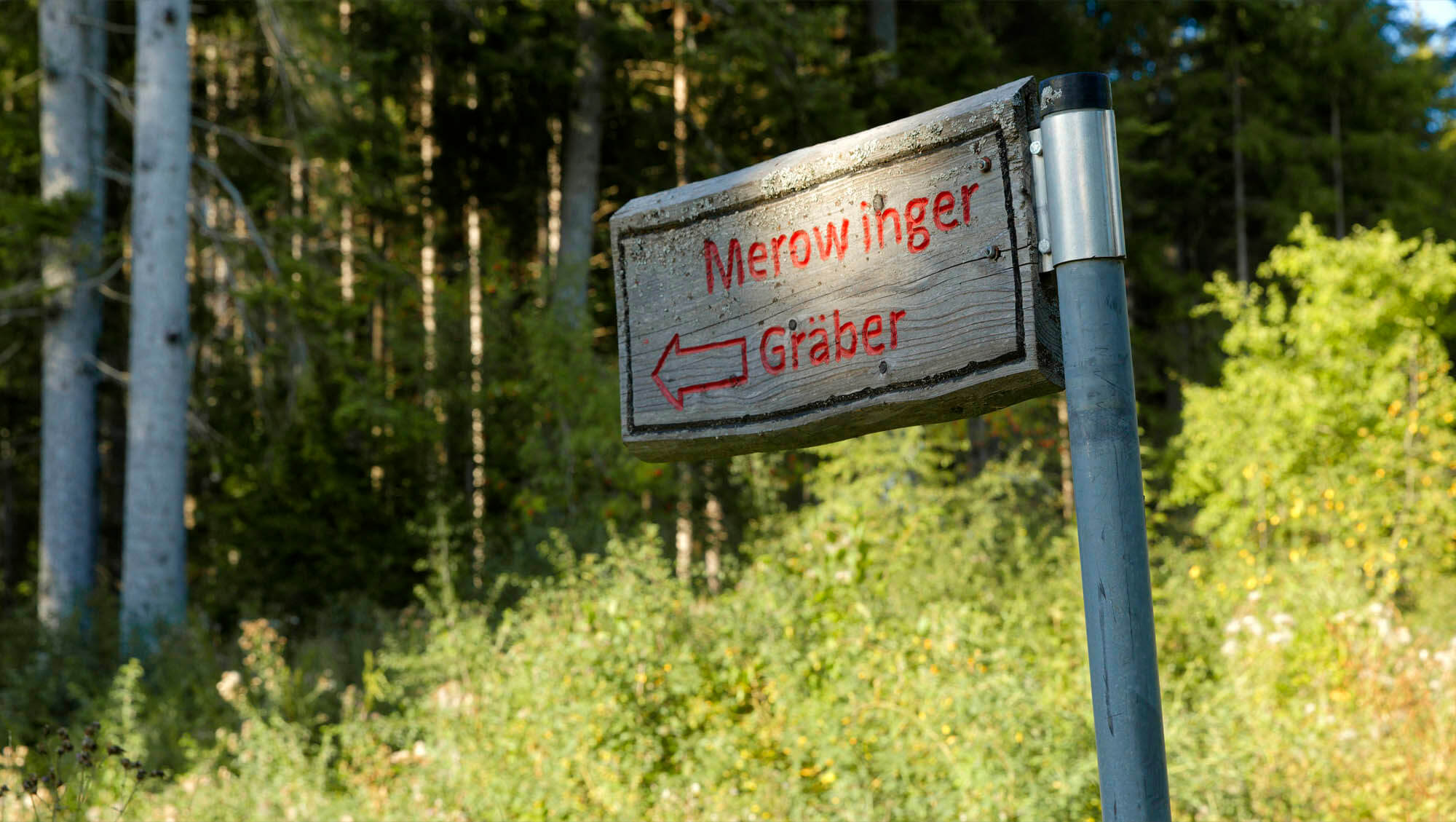
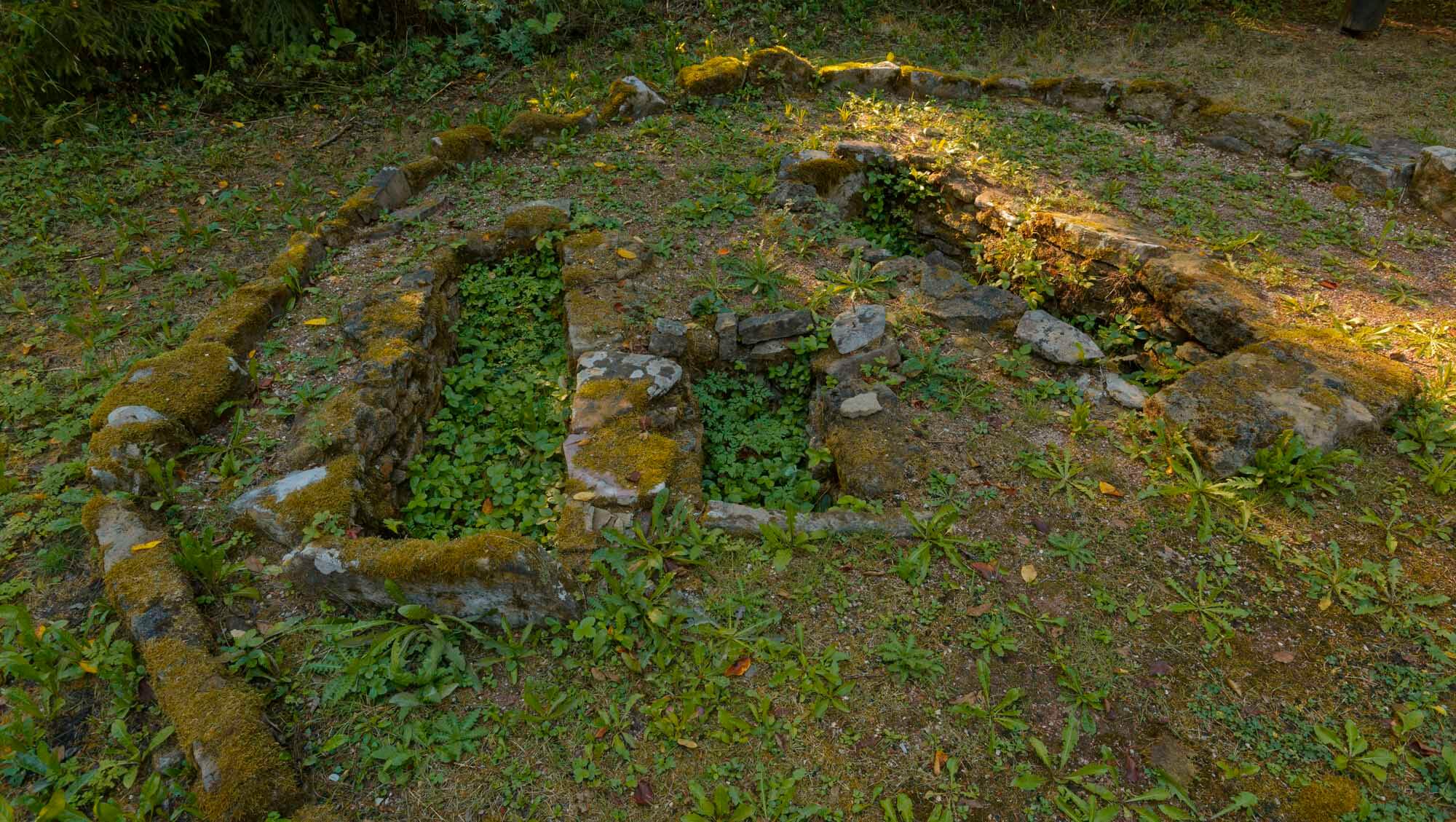
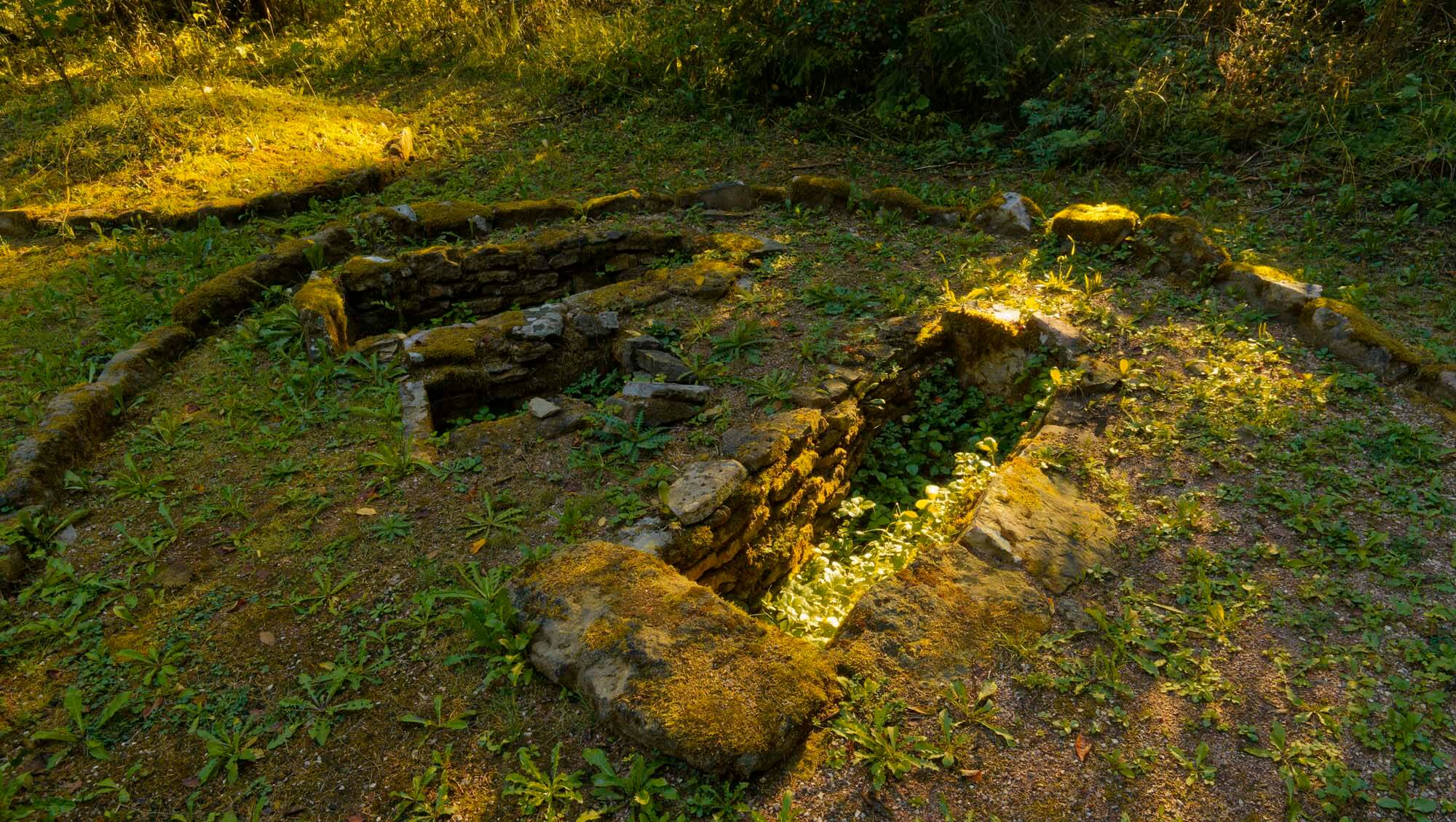
On the road from Pfaffenweiler to Tannheim, turn off towards Binsenhof. After less than a kilometre, a sign points to the ‘Merovingian graves’. After a few steps, you will see a small clearing on the left with the restored burial site. Stone cist graves are carved into the surrounding rock, dry-laid with stones and covered with large sandstone boulders. Stone circles mark the former burial mounds. Nine graves were found within the excavation area, all constructed in the same way and laid out in an east-west direction. Graves for children and adults were found, as well as multiple burials and reburials. All the graves had been robbed long ago, so there were very few grave goods, but these allow the graves to be dated from around 700 to the late 9th century.
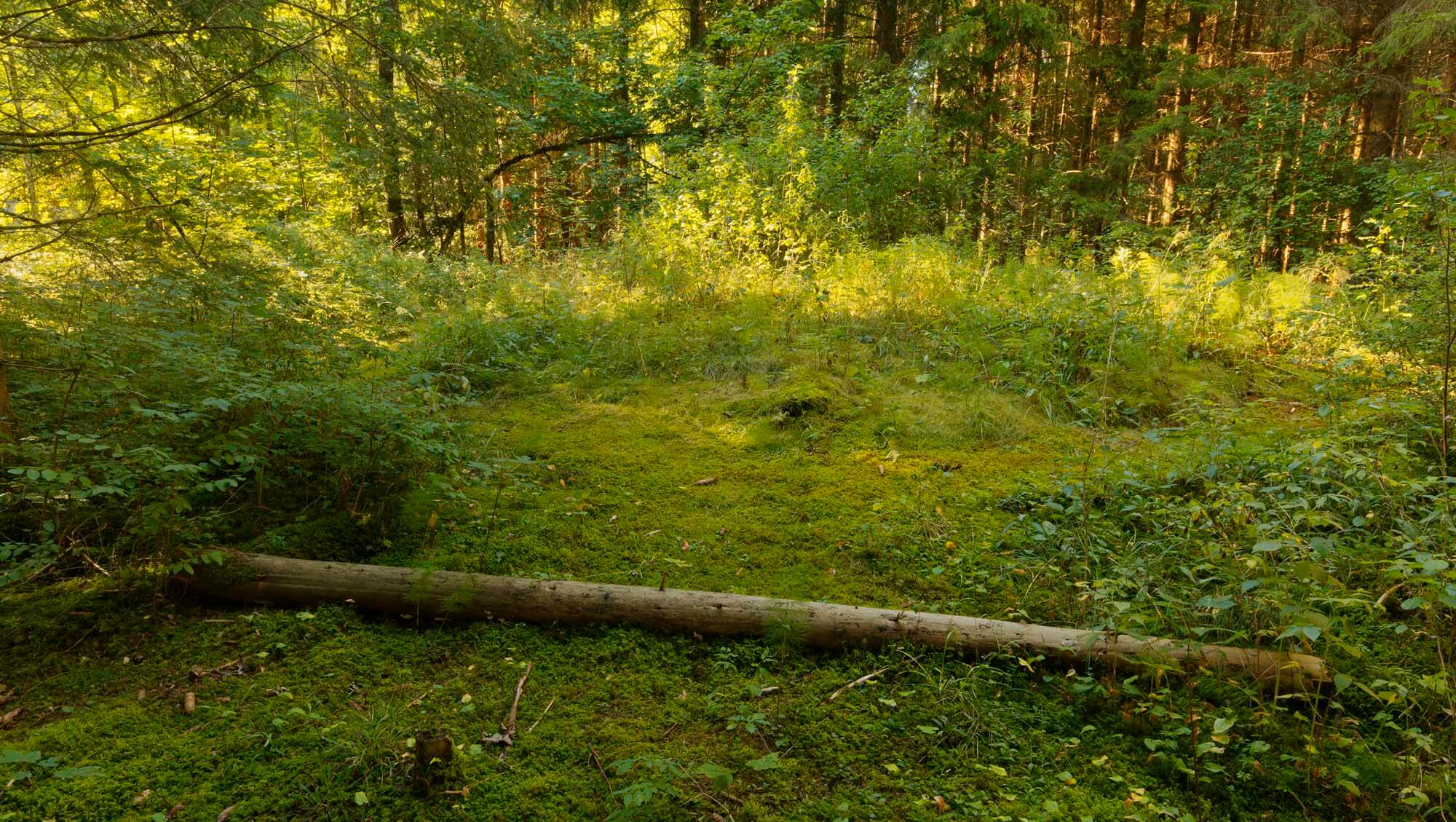
If you turn around, you see only dense forest on the other side of the path, but a large information board tells of further archaeological finds. In the undergrowth, heavily overgrown and barely recognisable, lies another burial mound – but from a completely different era! It dates from the same early Celtic period as the burial mound on Magdalenenberg, from the Hallstatt period, around 700 to 450 BC. When it was discovered, the burial mound was completely worn away, and the mound in the terrain could only be guessed at. Excavations showed that the mound had originally been built over a single cremation burial. The deceased had been burned on a pyre, the ashes collected in an urn and placed in a wooden chamber. Pottery was added to the grave, which had probably originally contained food and drink. Shortly afterwards, the mound was used for further burials; three graves from the younger Hallstatt period were found for women of a higher social class. They were buried in a similar manner to that known from Magdalenenberg, and their rich grave goods included leather belts, bronze embossed bracelets, earrings, neck rings and bronze hairpins. More than 1,400 years later, this mound was used again as a burial site, and two more graves from the Merovingian period were found. The dead had been buried in the mound in the 9th century without disturbing the old graves from the Hallstatt period.
This special place in the Eggwald was therefore used as a burial site by two very different cultures. What might this mean? Down in the Brigach Valley in Kirchdorf stands the ancient parish church of St. Martin. As early as the 6th/7th century AD, there was an Alemannic burial site near the church. Why, then, were some people, some families, buried up here among the Celtic burial mounds? What relationship did these people have to the ancient burial mounds? Did their ‘venerable ancestors’ lie here?
The great importance of the relationship with the ancestors is shown in a legend about the Christianisation of the Frisians in the Vita Vulframni. King Radbod had decided to convert to Christianity, and through baptism he had been promised eternal life with Christ in heaven. When asked, the bishop explained to him that all his unbaptised ancestors were in hell. The king then refused baptism and declared that ‘he could not do without the company of his Frisian princes who had gone before him, just to sit in that kingdom of heaven with a small band of poor people.’